Break-ins, after-hours vandalism and unmonitored access points cost Australian businesses far more than the price of a stolen laptop or a smashed window. They cost downtime, insurance premiums, staff safety, and in regulated sectors like education and government, they can cost compliance. Yet most businesses only think seriously about security after an incident.
This guide walks through what a commercial CCTV and security system actually involves in Australia, what drives the cost up or down, and the questions worth asking before you sign with an installer.
Why Australian businesses are investing in security integration now
Three things are pushing commercial and industrial sites toward proper security integration rather than a single alarm box on the wall:
- Multi-site operations. Retail chains, education providers and government facilities need one system that reports centrally, not a different vendor at every location.
- Insurance and compliance pressure. Underwriters increasingly ask for evidence of monitored CCTV, access control logs and alert systems before offering commercial cover.
- Convergence of technology. IP cameras, wireless RF alert systems and 100V line notification systems can now run on the same network, which used to require three separate contractors.
The core components of a modern commercial security system
A properly integrated system is rarely just cameras. In Australia, most commercial and industrial sites end up combining some mix of the following:
CCTV and video surveillance
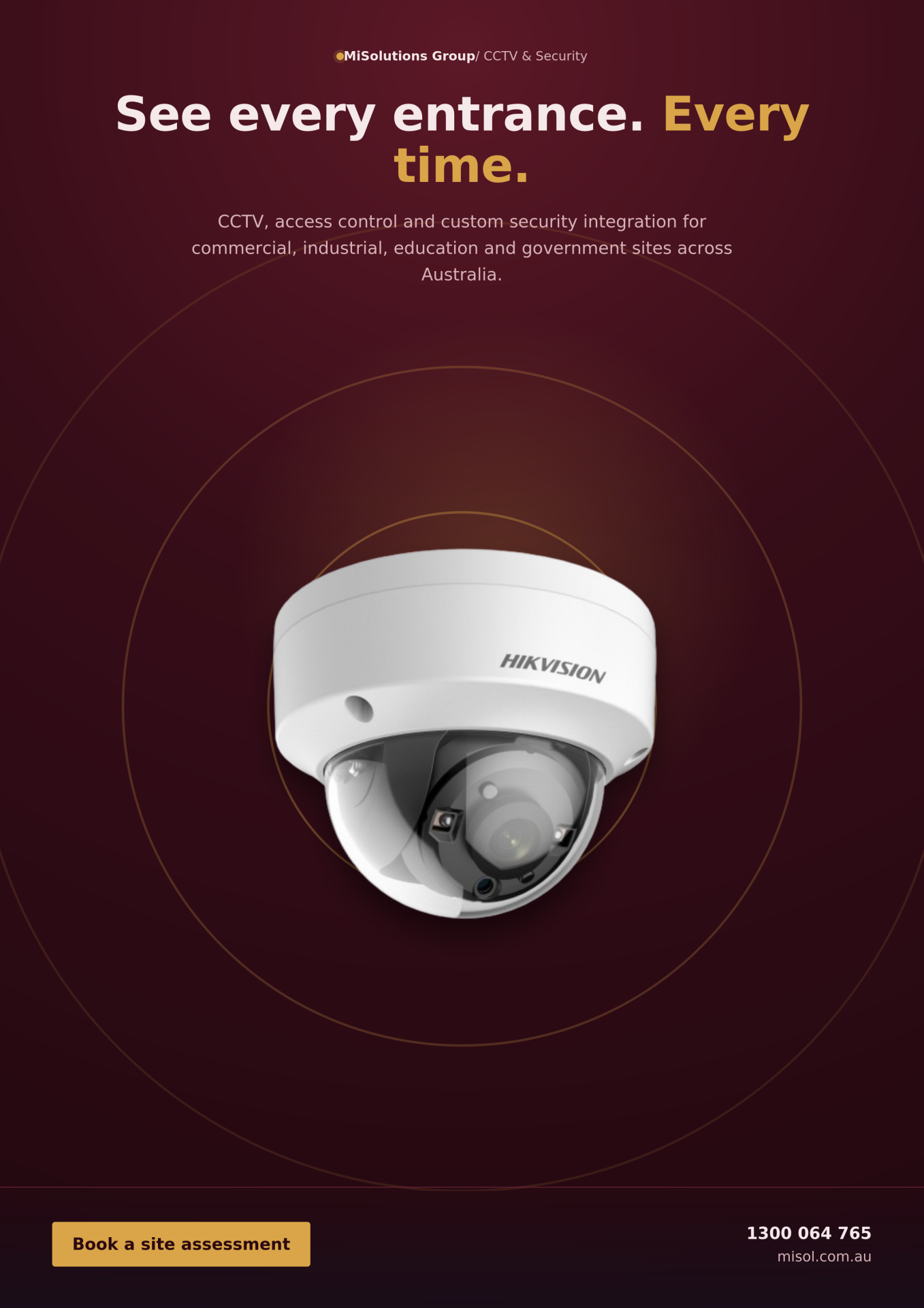
High-definition dome and bullet cameras covering entrances, loading docks, car parks and perimeters, recorded centrally and viewable remotely. Vandal-resistant dome cameras are the standard choice for external, publicly accessible areas because of their durability and wide-angle coverage.
Access control
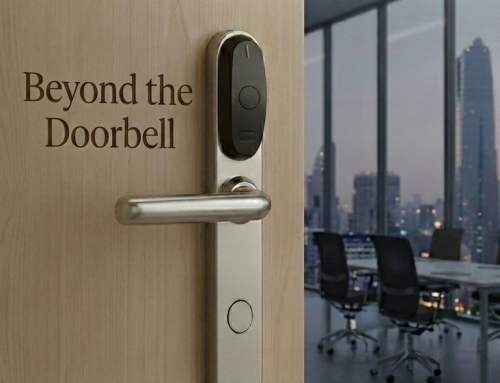
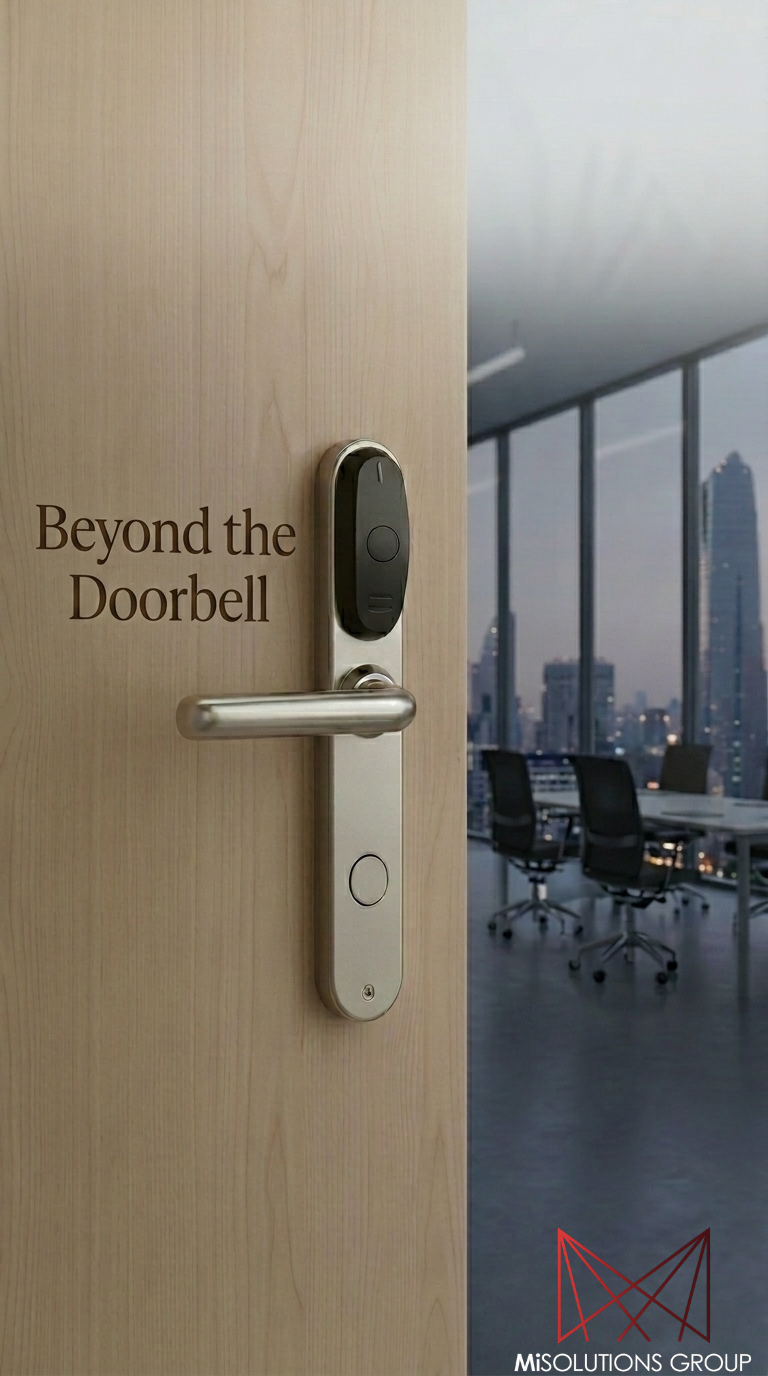
Card, fob or biometric entry systems that log who entered a building and when — essential for schools, government sites and any workplace with restricted areas.
Wireless RF alert and notification systems
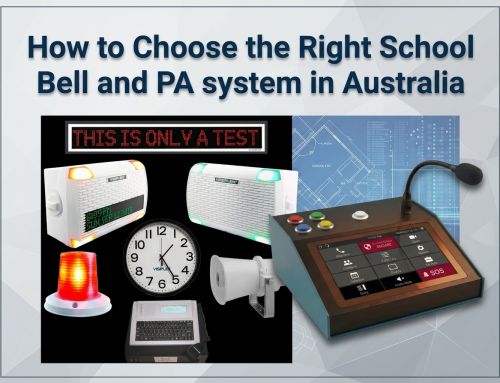
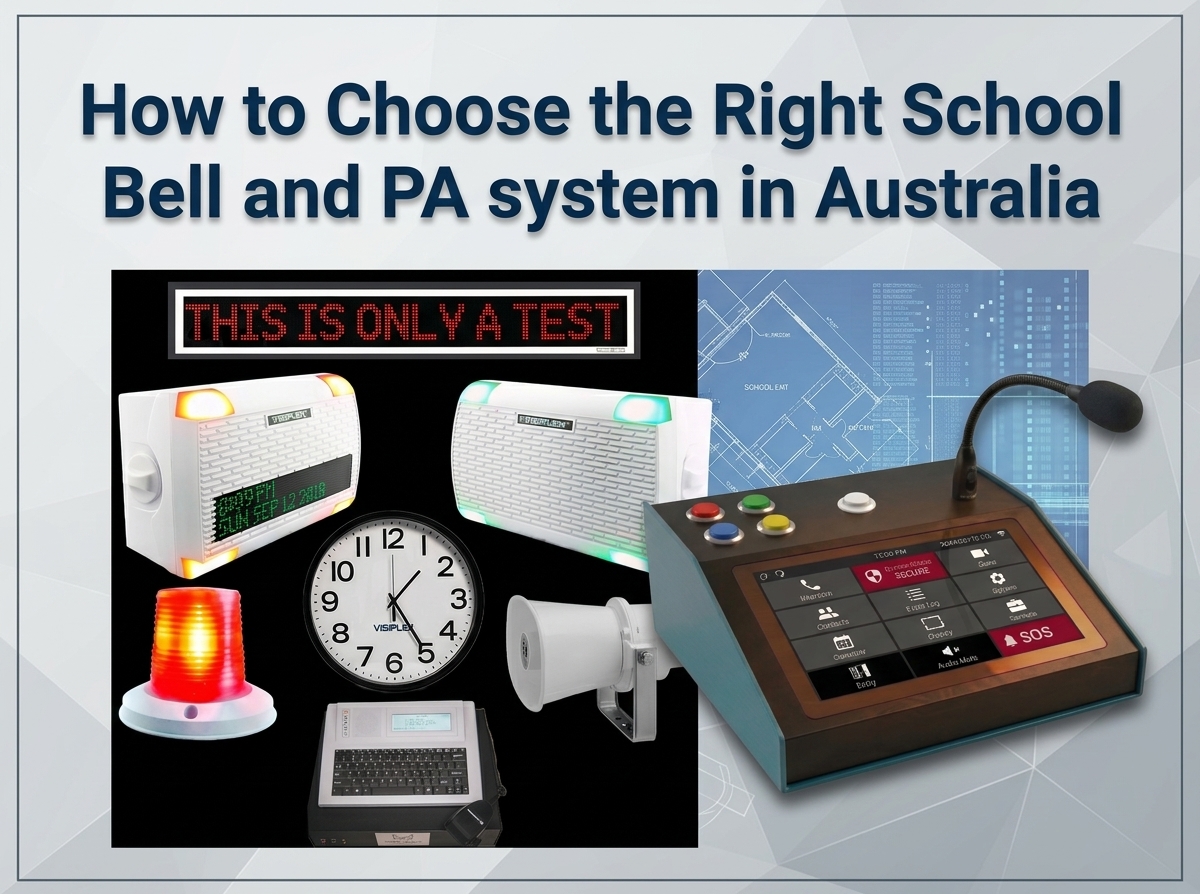
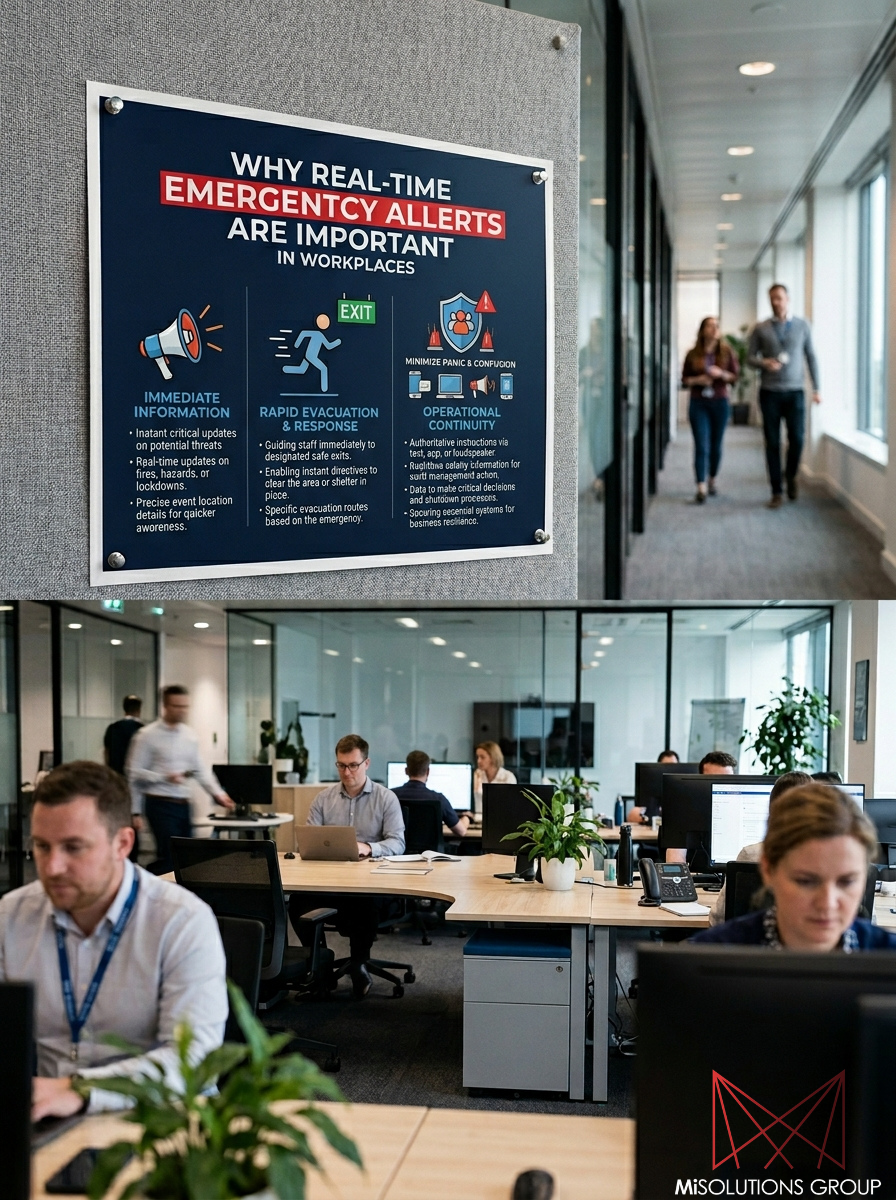
Bells, alerts and PA notifications delivered over licensed wireless RF, IP, or 100V line, without the cost of re-cabling a whole facility. Particularly relevant for large campuses, warehouses and multi-building sites.
Electrical and data cabling
The unglamorous but critical foundation. Poorly planned cabling is one of the most common reasons commercial security systems fail to scale later.
Custom integration and automation
Linking cameras, alerts, access control and building automation into one dashboard, rather than juggling five different apps and vendors.
What drives the cost of CCTV installation in Australia
There’s no single national price for commercial CCTV, but the main cost drivers are consistent across states:
- Number of cameras and coverage area — a single-entrance office and a multi-building industrial site sit at opposite ends of the cost scale.
- Cabling requirements — new-build electrical and data cabling costs more than retrofitting an existing structured cabling system.
- Storage and monitoring — on-site NVR storage versus cloud storage versus a monitored response service all carry different ongoing costs.
- Integration complexity — a standalone CCTV system is cheaper up front than one integrated with access control and alert notification, but the integrated system usually costs less over its lifetime.
- Site access and compliance requirements — schools and government sites often require after-hours installation and additional compliance documentation, which affects labour cost.
Because of this spread, the only reliable way to budget accurately is a site assessment rather than a generic quote.
Choosing a security integrator in Australia: what to check
Before engaging an installer for CCTV, access control or alert systems, it’s worth confirming:
- Are they licensed for electronic security and cabling work in your state? Requirements differ between states and territories.
- Do they design the system or just install a pre-set package? A genuine design-and-integrate process accounts for your building’s layout, blind spots and future expansion — a box-standard package often doesn’t.
- Can one team handle cabling, cameras, access control and notification systems? Fewer handoffs between contractors means fewer gaps in coverage and accountability.
- What happens after installation? Ask about ongoing support, firmware updates and how faults are reported and resolved.
- Do they have experience in your sector? Commercial, industrial, education and government sites each have different compliance and access requirements.
Industries that most commonly need integrated security in Australia
- Commercial offices and retail — entry monitoring, after-hours alerts, loss prevention.
- Industrial and warehousing — perimeter CCTV, access control for restricted zones, wireless coverage across large footprints.
- Education — lockdown notification systems, visitor access control, campus-wide bell and alert systems.
- Government and corporate facilities — compliance-grade access logging and integrated CCTV with centralised monitoring.
A practical starting point
If you’re assessing security for the first time — or replacing a system that’s grown into an unmanaged patchwork of old cameras and dead access points — start with a site assessment rather than a product list. A proper assessment identifies your actual coverage gaps, the right mix of CCTV, access control and notification technology, and a realistic cost range before any equipment is ordered.
MiSolutions Group designs, cables and integrates CCTV, access control and wireless alert and notification systems for commercial, industrial, education, government and corporate sites across Australia and Oceania.
Book a free site assessment → Or call 1300 064 765 / visit misol.com.au