MICONNECT L1 – LESSON 6 -HYBRID ON 100V LINE AUDIO
Hybrid on 100V Line
What it is
-
A hybrid deployment is when MiConnect is connected into existing 100V line amplifier/speaker infrastructure instead of replacing everything at once.
-
This allows schools or sites to gradually transition to IP-based alerting without discarding legacy hardware.
-
MiConnect feeds tones, music, and alerts into the 100V amplifier, which then drives the analogue speakers across the site.
What it can do
-
Retrofit into old wiring: Re-use the existing 100V speaker cabling and amplifiers.
-
Deliver tones & audio: MiConnect can still send bells, tones, music, and PA into the analogue system.
-
Add intelligence: Even when “bolted on,” MiConnect adds SMS, signage, strobes, sirens, vape detectors, CCTV triggers, and API/webhook integrations.
- Add NTP or GPS Time Sync: Do away with the old timer that needs changing, so hello to perfect time sync
What sets it apart
-
Unlike traditional tone generators, MiConnect brings IP-driven intelligence to an analogue backbone.
-
The system remains flexible:
-
Short term: legacy 100V lines continue to carry audio.
-
Long term: schools can migrate zone-by-zone to IP Nodes with independent control.
-
Why we developed it
-
Many schools have older 100V line systems that still work but are limited: single zone, single point of failure, no SMS/signage integration.
-
A full rip-and-replace is often costly and disruptive.
-
Hybrid allows a stepwise migration: start by bolting MiConnect onto the 100V amp, then gradually add IP Nodes and Gateways for proper zoning, redundancy, and safety device integration.
Real-World Example – Retrofitted School – Challenges and Results
-
Problem:
-
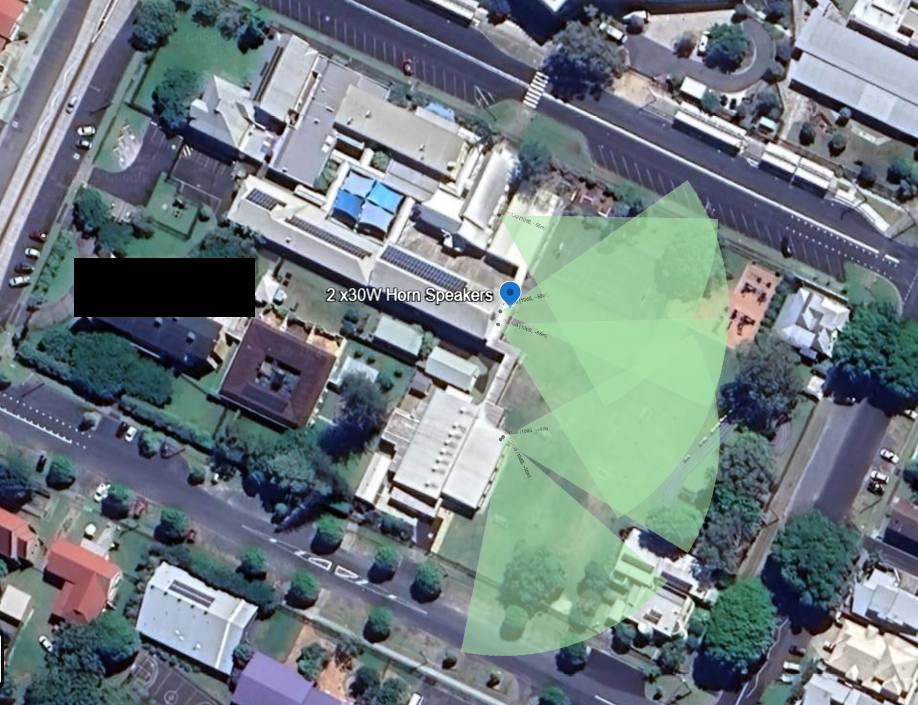
Canteen and Undercover external areas were underperforming.
-
Turning up the 500 W 100V amp only added ~0.5 dB outside but made classrooms uncomfortably loud.
-
Existing 2 × 30 W Redback horns didn’t cut through playground noise at 60–70 m..
-
-
Assessment Work Done:
-
Impedance and load testing showed 47 ohms / 212 W load on the 500 W amp.
-
Voltage drop testing showed less than 2% loss from amp to end-of-line — proving the issue wasn’t line loss, but amplifier design and distribution.
-
Sound analysis confirmed outdoor SPL was inadequate vs playground noise, even with amp gain increased.
-
-
Hybrid Solution:
-
A MiConnect Node was added locally to drive 2 × 30 W TOA SC-630 horns directly.
-
This removed long 100V line losses and gave each horn its own dedicated channel.
-
Result: +14 to +17 dB above playground noise at 60–70 m — strong, intelligible cut-through.
-
Indoor classrooms remained stable, since they stayed on the legacy 100V amp path.
-
-
Remediation:
-
Transition canteen horns to MiConnect Node.
-
Standardise internal taps to 5 W for balance.
-
Add a 30 W horn to COLA for busy zone coverage.
-
Upgrade hall amp for extended coverage to allow extra 30 W horn speaker.
-
Key Takeaway for Hybrid
-
Hybrid works, but only with careful engineering: load testing, impedance, voltage drop checks, and EQ/sound field measurement are essential.
-
Never assume turning up an old amp will solve coverage issues — it often just overdrives classrooms and still fails outdoors.
-
A Node placed locally on key speaker clusters can deliver the cut-through needed without upsetting the rest of the system.
Use the 100V Line design tool to help guide you through the process located https://www.misol.com.au/misolutions-design-tools/
Metaphor
👉 Think of hybrid as plugging solar panels into the old power grid.
-
The grid (100V system) keeps running, powering most of the suburb (classrooms).
-
The solar panels (MiConnect Nodes) supply extra local power where it’s needed most (canteen, Undercover, oval).
-
You still get energy across the grid, but true independence and zoning come only when more houses switch to solar.